
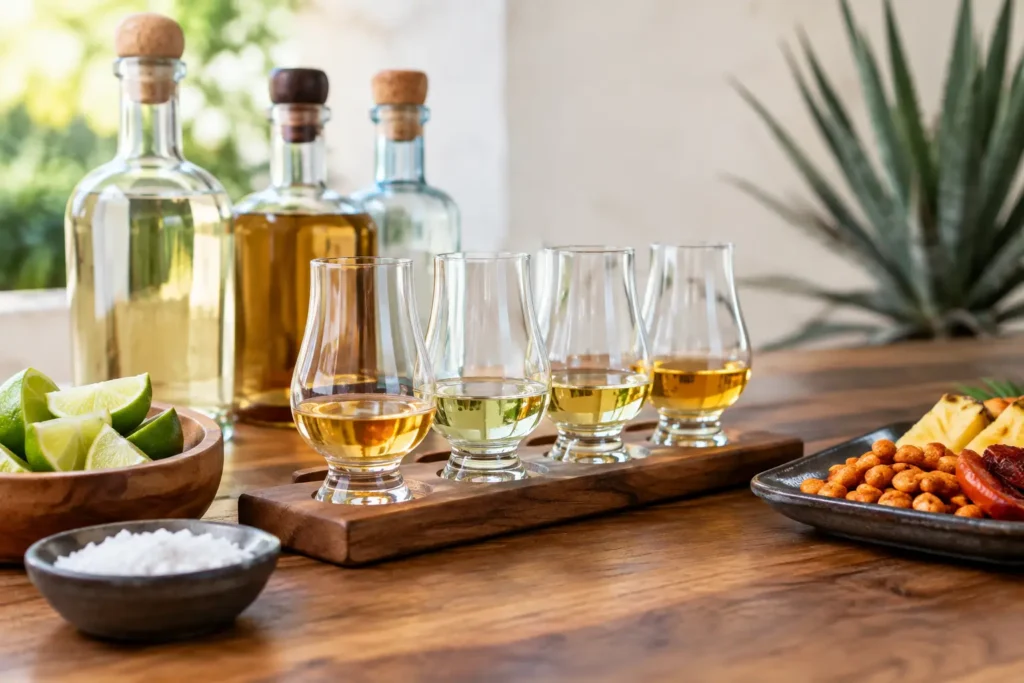
A great tequila tasting event does not begin with a shot glass, salt, and a race to the lime. It begins with good company, a proper pour, and the first bright aroma of cooked agave rising from the glass. This guide to tequila tasting events is for groups who want more from the night: real flavor, lively conversation, Mexican hospitality, and enough energy to carry the celebration from dinner to the dance floor.
Tequila is made for gathering. Whether you are planning a birthday night, bringing visiting friends together, organizing a corporate outing, or simply looking for a more memorable date night, a tasting gives everyone a reason to slow down, sip with intention, and share what they notice. Then, when the glasses are set down, the night can keep moving with food, music, and baile. ¡Vive la tradición!
Start With the Right Tequila Lineup
A thoughtful tasting does not need a huge number of bottles. Three or four pours are enough to show tequila’s range without overwhelming the palate. Look for bottles labeled 100% agave, which means all the fermentable sugars come from blue Weber agave. This is a helpful starting point for guests who want to understand the spirit itself.
For a classic progression, begin with a blanco, follow with a reposado, and finish with an añejo. Blanco tequila is generally unaged or rested briefly, so it tends to show the purest expression of agave: pepper, citrus, green herbs, earth, and a touch of sweetness. Reposado spends time in oak, bringing softer notes such as vanilla, caramel, baking spice, or toasted wood. Añejo is aged longer, often with a deeper, rounder profile that can recall dried fruit, chocolate, and warm oak.
The trade-off is simple. A blanco may feel more vibrant and agave-forward, while an añejo can feel familiar to whiskey drinkers because of its barrel character. Neither is automatically better. The best choice depends on what your guests enjoy and what food is on the table.
If your group includes tequila newcomers, consider keeping the lineup approachable: one crisp blanco, one balanced reposado, and one richer añejo. More experienced guests may appreciate comparing two blancos from different regions or producers. That side-by-side format reveals how much terroir, cooking methods, fermentation, and distillation can shape a tequila before it ever meets a barrel.
How to Taste Tequila Without Rushing It
Tequila tasting is not about proving who can handle the strongest pour. It is about noticing a spirit made from agave that takes years to mature before harvest. Give each guest a small pour, usually about half an ounce to one ounce. A small stemmed tasting glass is ideal, but a clean rocks glass works well when that is what the venue has.
Start by looking at the tequila. Color can tell you something about aging, but it does not tell the whole story. Swirl gently, then take a light first smell. Avoid putting your entire nose into the glass and inhaling hard, especially with higher-proof spirits. Instead, take short, relaxed breaths from just above the rim.
Invite guests to notice what they actually smell, not what they think they are supposed to smell. One person may find roasted agave and black pepper. Another may say lemon peel, honey, cinnamon, wet stone, or fresh-cut grass. All of those observations can be useful. Tasting is personal, and the conversation is half the fun.
Take a small sip and let it rest across the tongue for a moment. Breathe out gently through the nose after swallowing. This helps bring forward flavors that can be missed when the sip is rushed. Between pours, offer room-temperature water and plain crackers or mild tortilla chips. Strongly flavored snacks can flatten the next tequila before it has a chance to speak.
Skip the salt-and-lime ritual during the formal tasting portion. It has its place in a casual party moment, but it masks the detail you are trying to notice. Save the lime for a cocktail later in the evening, when the music gets louder and the celebration turns up.
Build a Tasting Event Around Food
The best tequila tasting events feel like a full cantina experience, not a classroom with liquor bottles. Food creates rhythm, gives guests a reason to linger, and makes the flavor comparisons even more enjoyable.
Blanco tequila loves bright, fresh dishes. Think citrusy ceviche, shrimp, guacamole, salsa verde, grilled fish, or tacos with pineapple and cilantro. Its clean agave character can cut through richness while staying lively beside lime, chile, and herbs.
Reposado offers more flexibility because its gentle oak notes can stand beside roasted meats, adobo, mushrooms, elote, and richer sauces. Añejo is especially good after the main course with mole, dark chocolate, caramelized desserts, or a plate of fruit and cinnamon. You do not need a formal pairing for every sip. A few smart bites between pours are enough to make the evening feel generous and grounded in flavor.
If you are hosting a mixed group, ask about allergies and dietary needs before finalizing the menu. A beautiful tasting should be welcoming to everyone at the table, not a guessing game. It also helps to provide satisfying nonalcoholic options, such as agua fresca, mineral water with citrus, or a zero-proof spicy drink. Great hospitality means every guest has something festive in hand.
Set the Mood, Not Just the Table
A tequila tasting can be elegant, playful, intimate, or full-on fiesta. The format should match the group. A date-night tasting may work best at a quiet table with three pours and a shared dessert. A birthday group may want a host who introduces each tequila, followed by dinner, cocktails, salsa lessons, and live music.
Keep the introduction short. Guests came to enjoy themselves, not take an exam. A few details about agave, aging, and what to look for are plenty. Then use easy prompts: Which pour would you order again? Which one surprised you? What food would you pair with it? These questions invite participation without making anyone feel wrong.
Lighting, music, and pacing matter as much as the bottles. Start with an atmosphere where people can hear the tasting notes and each other. As the evening opens up, bring in the Latin rhythms, the performers, and the dance floor. At La Catrina Cantina, that kind of progression turns a tasting into a complete night out, with Mexican food, entertainment, and shared celebration in one place.
For private events, consider the practical details early: group size, seating style, food service, timing, and transportation. A standing reception encourages mingling, while a seated tasting works better when guests want more guidance. If the group plans to dance afterward, leave a little space in the schedule rather than packing every minute with pours and speeches.
Pace the Celebration With Care
Tequila is easy to romanticize, especially at a high-energy event, but good hosts keep the experience comfortable. Serve measured pours, put food on the table early, and make water visible and easy to reach. Encourage guests to take their time. A tasting should leave people feeling connected and energized, not pushed past their limit.
It also helps to plan a clear ride home before the first glass is poured. Rideshare coordination, designated drivers, and nearby accommodations can make a major difference for visiting groups. Responsible planning is not a buzzkill. It protects the night everyone came to enjoy.
Make the Last Pour Memorable
The final tequila does not need a dramatic speech. It can simply be the moment when everyone chooses a favorite, raises a glass, and recognizes that the best part of tasting is what happens around it. A well-chosen pour can start a conversation, but warm service, great food, music, and laughter are what make people remember the night.
Bring curiosity, invite your friends to sip slowly, and let the celebration unfold at its own rhythm. The finest tequila tasting events leave guests with more than a favorite bottle – they leave them with a story worth sharing.