
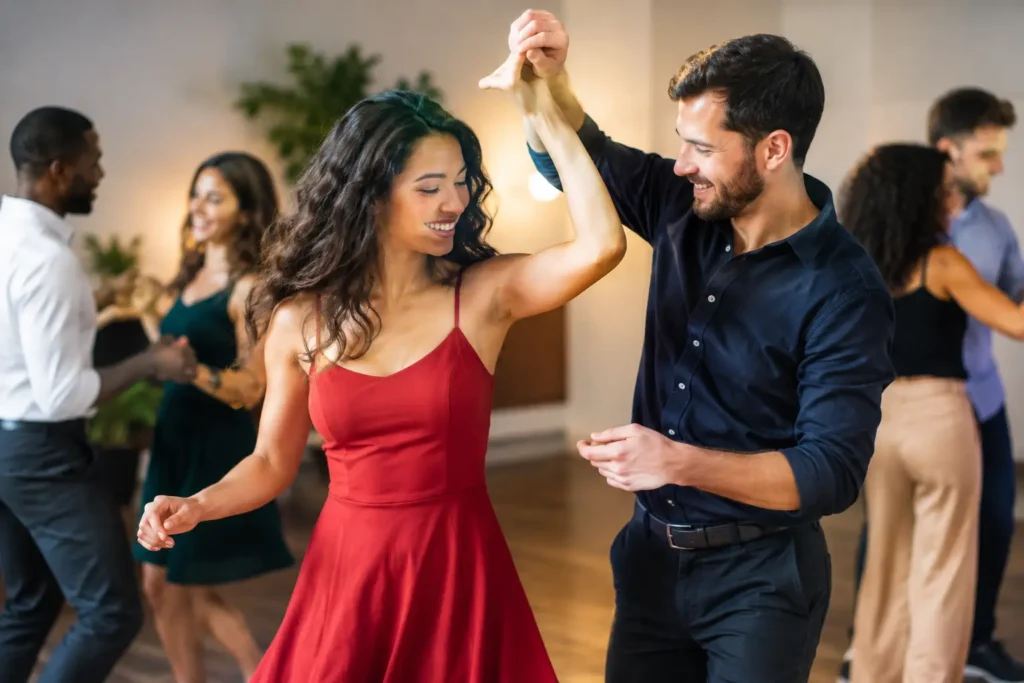
The first song begins, the dance floor fills, and suddenly the people who came in saying, “I don’t dance,” are smiling, turning, and keeping time with the beat. That is the real magic behind a guide to social dancing: it is not about showing off complicated moves. It is about joining the energy, sharing a song, and letting a great night become a story worth retelling.
At a lively salsa night, nobody expects perfection. They do notice good energy, respect, and a willingness to have fun. Whether you are visiting Puerto Vallarta, planning a birthday night out, or looking for a new way to meet people, social dancing gives you a reason to step away from the table and into the celebration.
Start With the Music, Not the Moves
Latin social dancing can look fast from the outside, especially when experienced dancers are spinning across the floor. But every dance starts with something much simpler: listening. Before you ask anyone to dance, take a minute to hear the rhythm. Let your feet find a comfortable step and notice where the beat repeats.
For salsa, beginners often count the music in groups of eight: one, two, three, pause, five, six, seven, pause. You do not need to announce the count or get stuck in your head. The point is to recognize the pulse and move with it. A small basic step, repeated with confidence, looks far better than a dozen rushed patterns.
Bachata is often easier to hear at first because its rhythm has a distinct side-to-side feel. Cumbia may feel more relaxed and grounded. Merengue is wonderfully forgiving because the basic step is a simple march in place. Each style has its own character, but the goal stays the same: connect to the music before worrying about what your hands or feet are doing.
If a free lesson is offered before the social dancing begins, take it. Arrive with an open mind, stand where you can see the instructor, and give yourself permission to be new. Lessons are not auditions. They are where the room warms up, people laugh at missed steps, and strangers start feeling like part of the same party.
A Guide to Social Dancing Begins With Good Etiquette
The best dancers are not always the flashiest dancers. They are often the ones who make every partner feel comfortable. Social dance etiquette is simple, but it matters because it creates the friendly atmosphere that keeps people coming back.
Ask clearly and kindly. A smile and “Would you like to dance?” is enough. If someone says no, smile, say “Of course,” and move on without taking it personally. They may be resting, waiting for a friend, or simply not feeling that song. A no is never a judgment of you.
When the song ends, thank your partner. Do not hold on to them for the next song unless they enthusiastically want to stay. One song is the usual social-dance invitation, and that short shared moment is part of what makes the scene so welcoming.
Keep your hands appropriate and your connection light. Leading is not pulling. Following is not guessing what comes next. A good partner gives clear but gentle direction, pays attention to space, and adjusts to the other person’s comfort level. If a move feels awkward, skip it. If the floor is crowded, choose simpler steps and protect the people dancing around you.
Fresh breath, clean hands, and a little awareness go a long way. Dancing is social and close-range. Bring your best guest energy to the floor.
What “Lead” and “Follow” Really Mean
Traditional social dance language often uses “lead” and “follow,” but these roles are about communication, not gender. Anyone can lead, anyone can follow, and many dancers enjoy learning both. At a social night, choose the role that feels most comfortable, or try switching during a class if the instructor invites it.
A lead suggests direction through timing, body position, and a calm hand connection. The lead does not force turns or pull a partner off balance. A follow stays present, keeps a responsive frame, and waits for the signal rather than anticipating every move. Both people are listening – to the music and to each other.
For beginners, this is excellent news. You do not need to memorize a performance. Learn the basic step, a simple turn, and how to return to your partner comfortably. That is already enough for a full song of fun.
Keep Your Moves Small at First
A crowded dance floor is not the place for big arm extensions, dramatic dips, or tricks you saw online five minutes ago. Simple moves give you more control and help everyone stay safe. Save dips for a trusted partner, plenty of space, and real instruction.
The most memorable social dancers make their partners feel relaxed. They stay on rhythm, smile, and leave room for the music. That is a much better goal than trying to look advanced before you are ready.
How to Feel Less Nervous on the Dance Floor
Nearly everyone feels awkward before their first few dances. The difference is that regular dancers have learned not to let the nerves decide the night. Start with one small commitment: dance one song before you leave. Not ten songs. Not a full routine. One song.
Choose a moment early in the evening, before you have spent an hour talking yourself out of it. Dance with a friend if that makes the first step easier, or join a group lesson where partners rotate. Rotations are especially helpful because they show you quickly that every person dances a little differently. You are not trying to pass a test. You are learning how to adapt.
Wear something you can move in. Shoes should feel secure and let you pivot without sticking to the floor. Comfortable clothing beats a perfect outfit if you plan to dance more than one song. If you are traveling, pack a pair of shoes you trust for a night out.
Most of all, stop watching only the most advanced couples. Watch the people laughing through a missed turn, clapping when a favorite song comes on, and inviting newcomers into the fun. That is the social dance community at its best.
Make the Night More Than a Dance Lesson
Social dancing shines when it is part of a full evening: dinner with friends, a round of drinks, live music, a salsa lesson, and then a floor full of people moving together. It is culture you can feel, not just watch from your seat.
At La Catrina Cantina, that spirit belongs naturally alongside authentic Mexican flavors, Latin entertainment, and a room ready to celebrate. Come early enough to enjoy the cantina atmosphere before the music picks up. A shared meal gives your group time to settle in, while a reservation can keep a birthday, reunion, or visitors’ night from becoming a last-minute scramble.
If you arrive with friends who are hesitant, do not pressure them. Invite them to watch the lesson, clap along, or try the easiest dance of the night. Often, the person who insists they will only observe is the first one smiling after a successful turn.
Social Dancing Is a Skill You Build One Song at a Time
Progress is rarely dramatic. One night, you may finally hear the salsa count. Another night, you may feel comfortable asking a stranger to dance. Later, you may recognize a song and know exactly where your basic step belongs. These small wins add up.
There will also be songs that feel too fast, partners whose style is unfamiliar, and moments when you lose the beat. That is normal. Laugh, reset with the basic step, and keep going. Social dancing rewards presence much more than perfection.
The next time the music rises and the floor begins to fill, do not wait for a perfect invitation or a perfect move. Take the lesson, ask for one dance, and let the rhythm introduce you to the room. The celebration is already happening. Your next step simply puts you in it.