
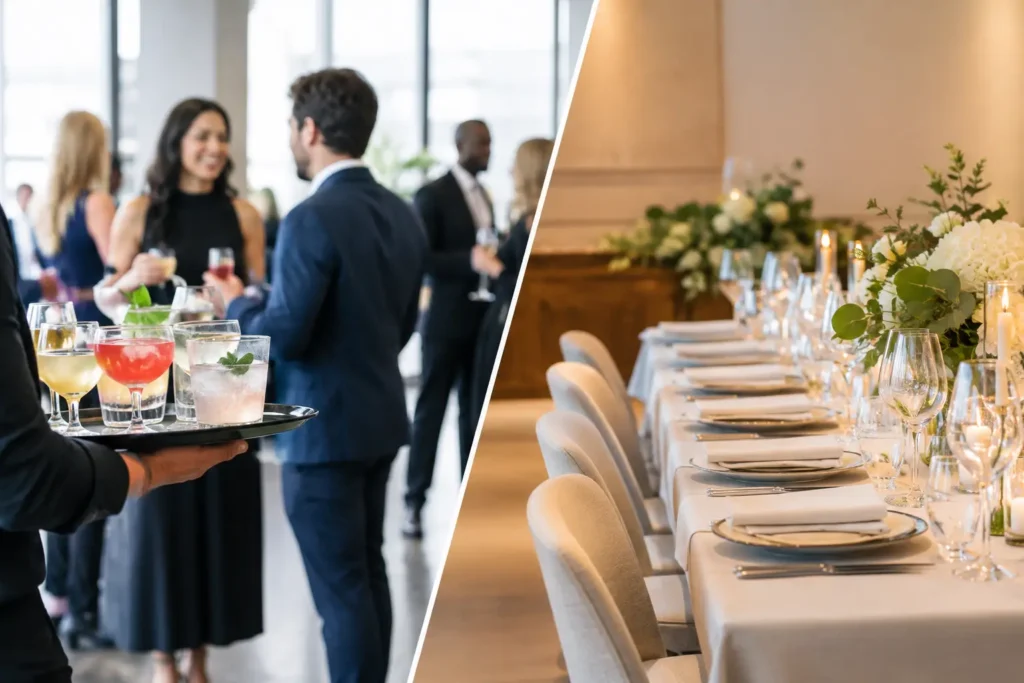
The choice between a cocktail reception versus seated dinner decides more than what guests eat. It sets the rhythm of the room. One format keeps people moving, mingling, and heading toward the dance floor. The other creates a polished shared meal with a clear moment for every toast, speech, and course. For birthdays, destination celebrations, rehearsal dinners, and corporate gatherings, the right choice is the one that matches how you want the night to feel.
At a cantina-style celebration, food and entertainment belong in the same conversation. A menu can bring guests together, but music, conversation, salsa, and live performance are what turn a gathering into a night people replay on the way home.
Cocktail Reception Versus Seated Dinner: The Real Difference
A cocktail reception is built around freedom. Guests arrive, grab a margarita or cerveza, sample passed bites and food stations, then move naturally between friends, the bar, and the entertainment. There is no assigned chair waiting for everyone at the same time. The room feels social from the first welcome drink.
A seated dinner is built around occasion. Guests are welcomed to their tables, the meal unfolds in courses or shared platters, and hosts have a natural place for formal remarks. It gives a celebration shape, especially when family members, colleagues, or multiple generations are gathering for the first time.
Neither option is automatically more festive. The difference is where the energy lives. At a cocktail reception, energy moves across the room. At a seated dinner, energy gathers around the table before moving onto the dance floor later in the night.
Choose a Cocktail Reception for Movement and Mingling
A cocktail reception is a strong fit when your guest list includes social circles that need time to mix. Think wedding welcome parties, milestone birthdays, team celebrations, group travel events, and fundraisers. People can reconnect at their own pace instead of being committed to one table for the full evening.
It also makes sense for a lively venue with Latin music and entertainment. A standing-forward format gives guests room to watch a salsa performance, join a lesson, take photos, and jump into the action when the beat changes. The food becomes part of the experience rather than an interruption to it.
The biggest advantage is flexibility. Guests who arrive late can still eat. Guests who want to dance early do not have to wait until dessert. Conversation shifts easily, and the host does not need to manage every transition with a microphone.
That freedom does require thoughtful planning. A reception should offer enough substantial food that guests feel genuinely hosted, not as if they were invited for snacks and expected to make a meal of chips. If the event overlaps with lunch or dinner, include filling options such as tacos, quesadillas, skewers, ceviche, rice dishes, or a chef-attended station. Clear timing matters, too. Let guests know whether they are attending cocktails and light bites or a full dinner-style reception.
A cocktail reception can feel especially polished when the food arrives in waves. Start with welcome drinks and lighter bites, bring out heartier selections as the room fills, then finish with something sweet or a late-night savory favorite. That pacing keeps the room energized without sending everyone to the buffet at once.
Choose a Seated Dinner for a Shared Occasion
A seated dinner gives hosts more control, which is often exactly what a meaningful event needs. If you are honoring a parent, celebrating an engagement, welcoming out-of-town guests, or presenting awards to a team, a table gives everyone a moment to settle in together.
This format also supports a more deliberate culinary experience. Guests can enjoy a composed menu, hear the story behind a signature dish, and share a meal without balancing a plate and drink while looking for friends. For some groups, especially those with older guests or guests who prefer a quieter start to the evening, that comfort matters.
A seated dinner creates natural structure for speeches. You know when most guests are present, served, and focused. A welcome toast can happen before the first course, a birthday tribute can land between dinner and dessert, and entertainment can become the reward after the meal. When the last plate is cleared, the party has a clear signal to rise.
The trade-off is that a seated dinner can slow the social flow if it runs too long. Guests seated with people they do not know may have fewer chances to mingle. Long speeches can make the room restless, and a complicated multi-course timeline can compete with live entertainment. Keep the program focused. Great food deserves attention, but the celebration should still have room to breathe.
Think About Your Guests Before Your Menu
Hosts often begin with the food, but guest behavior should come first. A group of close family and longtime friends may love lingering over a seated meal. A mixed crowd of travelers, coworkers, dancers, and birthday guests may come alive with a cocktail-style party.
Consider the age range and mobility needs of your group. A cocktail reception should always have comfortable seating available, even if it is not assigned to every guest. High-top tables, lounge seating, and reserved areas give people places to pause. A seated dinner should still include a welcoming bar or reception period so the event does not feel like everyone is being directed straight to their chairs.
Also consider the time of day. An early afternoon event can work beautifully as a relaxed reception with bright flavors and music. A prime dinner-hour event creates a stronger expectation of a full meal. Late-night celebrations often benefit from an energetic reception format with satisfying food available throughout the evening.
Budget, Timing, and the Details That Change the Decision
A cocktail reception is not always the lower-cost option. It can be, especially with a limited guest count and a focused selection of bites. But premium passed appetizers, multiple interactive stations, and a long open bar can add up quickly. A seated dinner may be easier to price per person because the menu and service timeline are more defined.
What matters is where you want to invest. If the priority is a full dining experience, table service and a planned menu may deliver the best value. If the priority is music, dancing, social energy, and a room that feels alive all night, put more of the budget into substantial reception food, drinks, and entertainment.
Timing changes the calculation as well. A seated dinner generally needs a longer uninterrupted block for service. A cocktail reception can keep guests engaged in a shorter window and works well before a show, a night of dancing, or another activity. For events that need both, a hybrid format is often the answer.
The Hybrid Format: Dinner First, Fiesta After
You do not have to choose one format and give up the benefits of the other. Start with a cocktail hour for welcome drinks and conversation, then invite guests to a seated dinner before opening the room for dancing and live entertainment. This works beautifully for weddings, anniversaries, and larger birthday celebrations.
The reverse can work, too. Begin with a lively reception, offer a relaxed family-style meal or reserved-table moment, then bring the party back with music and dancing. The best version depends on whether your guests are likely to arrive ready to celebrate or need a little time to warm up.
At La Catrina Cantina, this kind of celebration can feel especially natural: authentic Mexican flavors at the table, Latin rhythm in the room, and a reason for guests to stay once dinner is done. The goal is not to force a schedule. It is to create an experience where every part of the night builds anticipation for the next.
Make the Format Clear From the Invitation
Whatever you choose, tell guests what to expect. “Cocktails and dinner bites” sets a different expectation than “seated dinner to follow.” If there is a dress code, assigned seating, salsa lessons, performances, or a late-night dance portion, share that information early. Guests arrive more relaxed when they know the plan.
For a cocktail reception, make the food promise clear and make it generous. For a seated dinner, protect the time guests have to connect before and after the meal. In both cases, plan a few signature moments: a welcome toast, a favorite song, a birthday cake reveal, or the first invitation to the dance floor.
Choose the format that gives your guests permission to celebrate the way they naturally do. A beautiful meal can become a fiesta, and a room full of mingling can still feel deeply personal. Serve the flavor, set the music, and leave enough space for the best part of any gathering: people enjoying the moment together.