
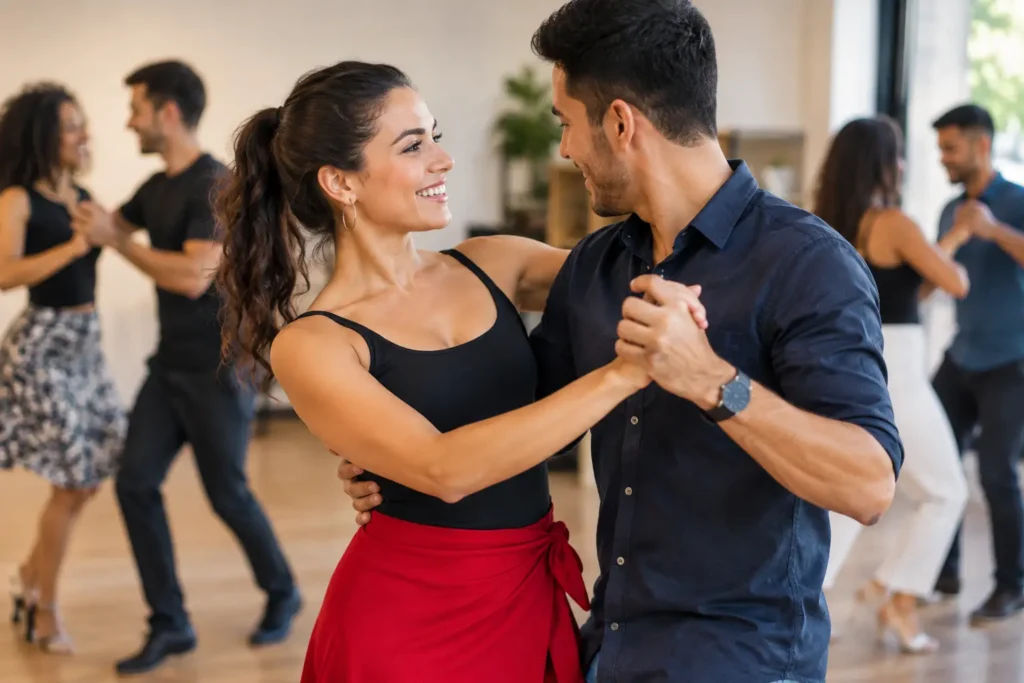
A salsa lesson review should not begin and end with whether you learned a turn. The real question is whether the lesson makes you want to stay for the music, meet new people, order another round, and step back onto the dance floor with more confidence than you had an hour earlier. For a night out built around Latin culture, that fuller experience is what makes a free lesson worth showing up for.
What This Salsa Lesson Review Looks For
A good salsa lesson serves two audiences at once: the person who has never danced a basic step and the guest who already knows enough to want a warm-up before social dancing begins. That balance is harder than it sounds. Move too quickly, and beginners spend the night watching their feet. Move too slowly, and experienced dancers lose interest before the party gets going.
The best format starts with the rhythm. Salsa can feel intimidating when the music is fast, but the basic count gives guests something solid to return to: step, step, step, pause. A welcoming instructor breaks that pattern into manageable pieces, lets everyone practice it without pressure, then adds a simple turn or partner connection once the room is ready.
This is not the place for perfection. It is the place to laugh when a turn goes sideways, reset, and try again. Guests who arrive in jeans, date-night outfits, or vacation clothes should all feel like they belong on the floor. That relaxed energy matters as much as technical instruction, especially for visitors who may only have one night to enjoy the experience.
The beginner test: Can you join without a partner?
A salsa lesson earns high marks when solo guests feel just as included as couples. Partner dancing is social by nature, but no one should be left standing at the edge because they arrived alone. Rotation, clear invitations to switch partners, and a friendly crowd turn an unfamiliar room into a shared experience.
There is a trade-off, of course. Constant rotation can feel awkward for a guest who is shy or traveling with a partner who prefers to stay together. A thoughtful lesson leaves room for both. Join the rotation, keep your partner, or practice on your own – the goal is to keep moving and have fun.
Clear instruction beats complicated choreography
A memorable lesson does not need ten moves. In fact, too many patterns can make a first-timer forget the one thing that matters: staying on time with the music. Strong instruction focuses on posture, timing, connection, and one or two moves guests can actually use later that night.
Look for cues that are easy to hear over a lively room. The instructor should demonstrate from more than one angle, repeat the count, and make correction feel encouraging rather than embarrassing. When people leave the lesson able to recognize the beat and lead or follow a simple turn, the lesson has done its job.
A Salsa Lesson Is Better When the Party Continues
The biggest difference between a studio class and a cantina salsa lesson is what happens next. In a studio, the final song often means gathering your things and heading home. At a nightlife venue, the lesson is the first spark of the evening. The music continues, the room gets livelier, food and drinks are close by, and the dance floor becomes a place to practice without calling it practice.
That setting is especially valuable for beginners. Repeating a basic step during a real social dance helps it stick far better than rehearsing it in silence. You get to see how different people move, how the rhythm feels in a crowded room, and how much fun salsa can be when nobody expects a performance.
At La Catrina Cantina, free salsa lessons fit naturally into a bigger cantina experience of Mexican flavors, Latin entertainment, celebration, and social connection. Rather than planning dinner at one place and dancing somewhere else, guests can make one reservation and let the night build from there. It is a practical advantage for birthday groups, couples, visitors, and anyone who wants more from an evening than a quick meal.
The atmosphere will not suit every type of learner. If you want detailed technical coaching, long practice drills, or a quiet room where every correction is personal, a dedicated dance school may be the better choice. But if you want an upbeat introduction that leads directly into food, music, and dancing, the cantina format has a clear advantage.
Who Will Get the Most From the Experience?
First-time dancers are likely to enjoy the low-pressure entry point. You do not need dance shoes, a complicated outfit, or a full routine memorized before you arrive. Comfortable shoes with a sole that lets you pivot are helpful, but confidence is more useful than special gear.
Couples can use the lesson as a playful start to date night. There is something memorable about learning a new rhythm together, especially when neither person needs to be an expert. The lesson gives you a shared reason to laugh, focus, and celebrate the small wins before the rest of the night begins.
Groups tend to bring the strongest energy. A birthday party, reunion, or friends’ night out can start with everyone learning the same basic step, then turn into a dance-floor celebration. The key is choosing a group that is willing to participate. One enthusiastic friend can get the whole table moving; one person determined to stay seated can change the mood just as quickly.
More experienced dancers can still enjoy the social side, even if the basics feel familiar. Treat the lesson as a warm-up, help make newcomers feel welcome, and save advanced styling for the open dance floor. A good salsa community grows when skilled dancers remember how it felt to be new.
How to Get More From a Free Salsa Lesson
Arrive early enough to settle in before the instruction begins. Rushing through the door at the first count makes it harder to relax, find a place on the floor, and hear the opening explanation. A little extra time also lets you enjoy the cantina atmosphere before the energy rises.
Wear something you can move in and keep your expectations simple. Your goal for the first night is not to become a professional dancer. Aim to find the beat, learn the basic step, and dance through one song without overthinking every move. That is real progress.
After the lesson, stay for at least a few songs. This is where the value of the experience becomes clear. Ask someone to dance, practice the pattern you learned, or simply watch the floor and let the music settle into your body. Salsa is a conversation, and the best way to learn the language is to join it.
Salsa Lesson Review Verdict
For guests looking for a social, festive introduction to Latin dance, the cantina-style salsa lesson is worth the night out. Its strength is not formal training alone. It is the combination of approachable instruction, live energy, cultural atmosphere, and a room full of people who came to celebrate.
Come ready to take a few imperfect steps, enjoy the music, and let the evening surprise you. The first turn may be clumsy, but the next song is waiting.