
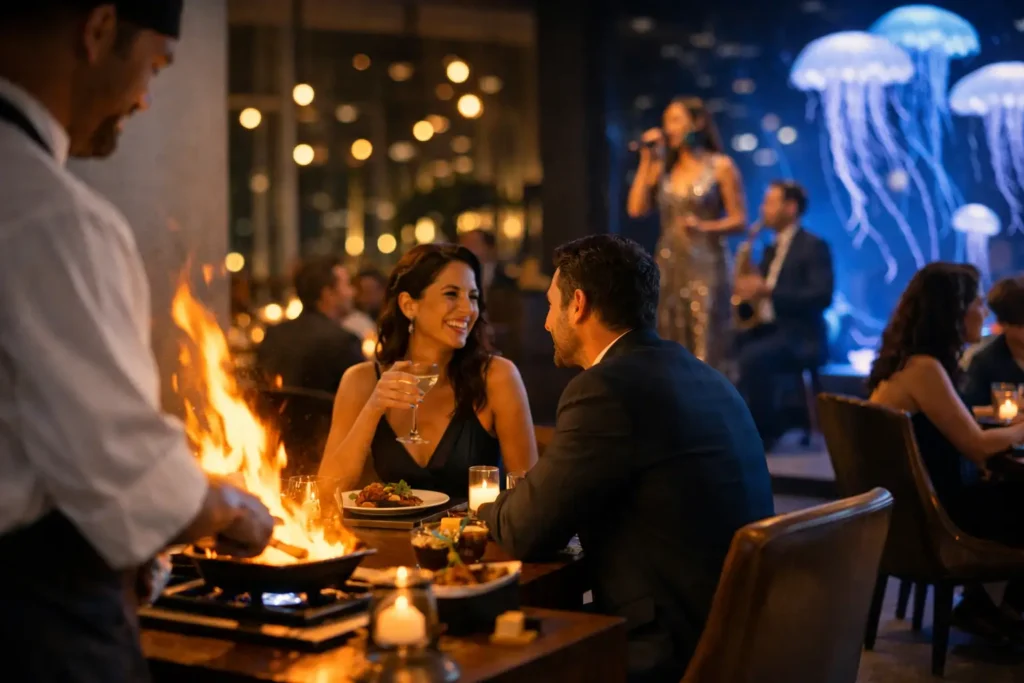
A great night out should not end when the plates are cleared. The most exciting experiential dining trends are built around that idea: guests want dinner to become music, movement, conversation, celebration, and a story worth retelling the next morning. They are choosing places where the energy keeps rising, not venues that treat food, drinks, and entertainment as separate plans.
For travelers, locals, birthday groups, and anyone looking for a real reason to go out, the new standard is simple. Give us something to taste, something to hear, and something to be part of. From salsa lessons before the show to a late-night toast with the whole table on its feet, dining is becoming a shared occasion.
Experiential Dining Trends Are About Participation
For years, restaurants competed on menus, locations, and décor. Those things still matter, but guests now remember how a place made them feel. A beautiful cocktail may earn a photo. A live singer, a spontaneous dance floor, or a room full of people celebrating together earns a return visit.
The strongest experiences do not feel like entertainment added at the last minute. The food, music, service, and atmosphere need to belong together. In a Mexican cantina setting, that might mean sharing tacos and margaritas while Latin rhythms fill the room, then joining a salsa lesson before performers take the stage. The experience feels natural because the culture is not a theme pasted on the wall. It is present in the flavors, the sound, the hospitality, and the celebration.
That distinction matters. Guests can tell when a venue is performing authenticity versus living it. A menu with familiar names is not enough. People want the warmth of being welcomed into an atmosphere with its own character and traditions.
Live Entertainment Is Part of the Meal
Live music and performers are no longer reserved for a rare special event. They are becoming a reason to make dinner reservations in the first place. A guest deciding where to eat on a Friday may be choosing between a quiet meal and a complete night out. When the second option includes dinner, cocktails, and a live show in one destination, the decision gets easier.
This does not mean every table wants the same volume or pace. The best entertainment-led venues understand timing. Early in the evening, guests may want enough music to set the mood while they catch up over dinner. Later, the energy can build toward singing, dancing, and a full-room celebration. That progression gives different kinds of guests a place in the same night.
Recurring programming also changes the relationship between a venue and its customers. A weekly salsa night, open mic, or Latin performance gives people a reason to come back with new friends. Instead of asking, “Where should we eat?” they ask, “What is happening this week?” That is a much stronger connection.
Culture Gives the Experience Meaning
A memorable experience is more than noise, neon, or a camera-ready backdrop. Guests increasingly want places with a point of view. They want to taste regional flavors, hear music with history behind it, and join traditions that feel alive rather than staged.
Mexican and Latin culture offers a powerful foundation for social dining because it celebrates generosity, rhythm, family, and gathering. Shared plates invite the table to interact. Tequila and mezcal can become part of a guided tasting or a toast. Salsa music does not stay in the background for long. It calls people closer, gets feet moving, and makes strangers feel like part of the same party.
Still, cultural experiences require care. The goal is not to turn heritage into decoration. It is to create a setting that respects the food, music, and people behind the experience. That means thoughtful programming, knowledgeable staff, real hospitality, and entertainment that feels connected to the venue’s identity. Guests notice the difference, especially those who know and love the culture being celebrated.
Social Dining Beats Passive Dining
One of the clearest experiential dining trends is the move from watching to participating. People do not only want to see performers. They want a chance to take the first salsa step, sing at open mic, cheer for the birthday guest, or raise a glass during a shared moment.
Participation has a special value for groups. Planning a birthday, reunion, or visitors’ night out can become complicated when dinner is in one place, music is somewhere else, and dancing requires another stop. An all-in-one cantina removes that friction. The group can arrive hungry, settle into a table, enjoy the show, and stay as the night opens up.
There is also a quieter benefit. Shared activity makes conversation easier. A salsa lesson gives new guests a low-pressure way to meet people. A live band gives longtime friends something to react to together. Open mic creates room for unexpected talent and big applause. These are the moments that turn a reservation into a memory.
The Best Experiences Still Respect the Food
Entertainment can bring guests through the door, but food and drinks give the night its foundation. If the menu feels like an afterthought, the experience loses credibility fast. Diners want bold flavors, generous hospitality, and dishes that work for the way people actually gather.
Shareable options are especially valuable in an energetic setting. They make it easy for tables to sample, talk, and keep the celebration moving. Cocktails should feel festive but balanced, with choices for the guest who wants a classic margarita, the adventurous mezcal fan, and the friend who is keeping the night alcohol-free.
There is a trade-off, of course. A room designed for dancing and live music may not suit someone seeking a long, hushed business dinner. That is not a weakness when expectations are clear. The right venue does not need to be everything to everyone. It needs to confidently deliver the occasion it promises.
Why Reservations and VIP Spaces Matter More Now
As experience becomes the product, planning becomes part of the guest journey. A reservation is not simply a way to hold a table. It is a way to claim a place in the night. For a couple, that may mean a table close enough to enjoy the performance. For a larger group, it may mean knowing everyone can sit together before the dancing begins.
VIP areas and private event options are growing because guests want celebration without logistical stress. They want one location where food, drinks, music, service, and a lively atmosphere are already in place. Event organizers especially appreciate not having to coordinate a restaurant, entertainment, and late-night venue separately.
At La Catrina Cantina, that all-in-one approach reflects what guests are asking for: authentic Mexican ambiance, Latin entertainment, social energy, and a reason to stay past dessert. A night can start with dinner and end with salsa, applause, and a full dance floor.
What Makes an Experience Worth Returning For
The most successful venues do not chase every trend. They create a reliable rhythm that guests can trust, then leave room for surprise. Familiar weekly events build loyalty. Special performers, holiday celebrations, and themed nights keep the calendar fresh.
Service plays a major role, too. A warm welcome, a server who understands the night’s program, and staff who can guide first-time guests into the fun make a big difference. Not everyone arrives ready to dance. A friendly invitation can change that.
The future of dining is not only about what is served. It is about where the night takes people. Choose the places that feed the table, lift the room, and give everyone a reason to say, “One more song.” ¡Vive la tradición!