
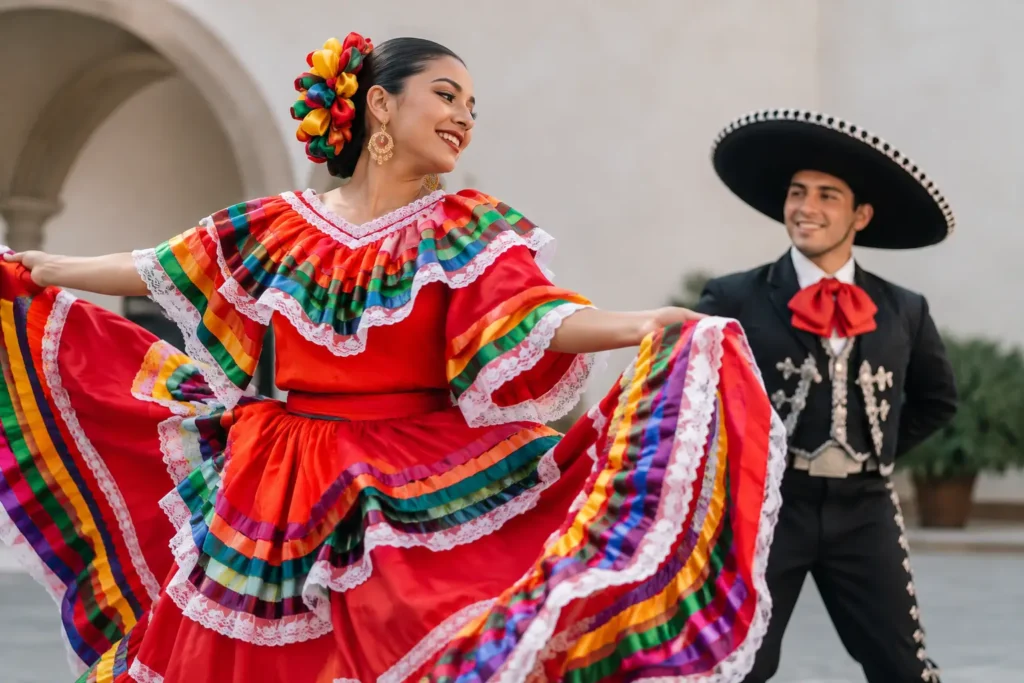
A packed dance floor tells you more about a place than a postcard ever could. So, what is Mexican baile? At its heart, baile means dance in Spanish, but in Mexico it can mean far more than a set of steps. It can describe a traditional regional dance, a social dance party, or the shared feeling created when music, food, family, and celebration come together.
For visitors, Mexican baile is an invitation to participate. You may see polished performers in embroidered costumes, couples moving to a live band, friends learning a salsa turn, or an entire room clapping to the rhythm. The style changes by region and occasion, but the spirit stays familiar: joy is meant to be shared.
What Is Mexican Baile, Exactly?
The direct translation of baile is “dance.” In everyday conversation, someone might say they are going to a baile and mean they are heading to a dance event. In a cultural setting, baile may refer to a specific folk dance connected to a Mexican region, its music, clothing, and history.
That distinction matters. Mexican dance is not one single style. Mexico has a vast range of traditions shaped by Indigenous communities, Spanish influence, African rhythms, migration, and regional pride. A Jalisco performance does not look or sound the same as a dance from Veracruz, Oaxaca, or northern Mexico.
At a social event, the word can be broader. A baile may include cumbia, salsa, merengue, bachata, norteño, banda, or modern Latin hits. The playlist depends on the crowd, the city, and the occasion. What ties it together is the social ritual: people come to move, celebrate, meet others, and enjoy music as a group.
Mexican Folk Dance Carries Regional Identity
Traditional Mexican folk dance, often called baile folklórico, brings regional stories to life through choreography and dress. It is expressive, theatrical, and deeply connected to the music of each area. These dances are often performed at cultural festivals, holidays, weddings, community celebrations, and live entertainment venues.
One of the best-known examples comes from Jalisco. Dancers performing to mariachi music may wear the charro suit or the colorful, wide-skirted china poblana dress. The movement is proud and energetic, with quick footwork known as zapateado. When skirts sweep across the stage and dancers strike the floor in rhythm, the performance feels both elegant and powerful.
Veracruz offers another unmistakable tradition: son jarocho. Its music features instruments such as the jarana and harp, while dancers use rhythmic footwork on a wooden platform called a tarima. The footwork becomes part of the music itself, creating percussion under the melody.
In northern regions, dances often reflect ranching culture and polka-influenced rhythms brought by European immigrants. You may hear accordion-driven music and see lively partner dancing. In other parts of the country, Indigenous and ceremonial traditions preserve local histories that deserve respect beyond their visual beauty.
The costumes are not just decoration. Embroidery, colors, hats, boots, ribbons, and skirt styles can signal where a dance comes from. A great performance makes the details feel alive, but it also reflects generations of community memory.
A Baile Is Also a Night Out
Outside a formal performance, a Mexican baile is often a social gathering built around dancing. Think less about sitting quietly in a theater and more about a lively room where the music keeps changing, tables fill with friends, and nobody has to be an expert to join the floor.
These events can be relaxed or dressed up. A family celebration may begin with dinner and become a dance party. A festival baile may feature a regional band. A nightlife venue may blend DJ sets, live performers, Latin dance lessons, and a mix of genres designed to keep the energy high.
There is no single rulebook for how to participate. Some guests arrive ready to dance every song. Others enjoy a drink, watch the performers, and step in when a favorite rhythm starts. Couples may dance close and smoothly to bachata, then switch to upbeat turns for salsa or cumbia. Groups often form a circle, cheer each other on, and make the whole room feel welcoming.
That is one reason baile works so well for travelers and mixed groups. You do not need to know every song or every step to feel included. Curiosity and a good attitude go a long way.
The Rhythms You May Hear at a Mexican Baile
A Mexican baile can feature many musical styles, and the experience changes with the rhythm. Cumbia is a favorite because its steady beat is easy to follow and welcoming for beginners. It can be danced with simple side-to-side movement or more elaborate partner turns.
Salsa is fast, bright, and social. It rewards practice, but a first-timer can still enjoy the basics. Learning when to step, relax your shoulders, and follow the beat is enough to start. Bachata tends to feel more intimate and melodic, while merengue is wonderfully straightforward, with a marching rhythm that helps new dancers settle in quickly.
Regional Mexican music brings a different flavor. Banda, norteño, rancheras, and mariachi can inspire partner dancing, singing, and plenty of audience participation. The right choice depends on the setting. A folklórico showcase highlights heritage and choreography; a late-night social baile may lean toward salsa, cumbia, and popular Latin tracks.
How to Enjoy Mexican Baile if You Are New
The biggest mistake newcomers make is waiting until they feel “good enough.” Mexican baile is social before it is technical. Start by listening to the beat and copying a simple basic step. If a lesson is available, take it. A few minutes of instruction can turn nervousness into a fun challenge.
Bring comfortable shoes with support and enough grip to move safely. Very sticky soles make turns difficult, while shoes that slide too much can feel unstable. If you are attending a traditional performance, give the dancers your attention and applause. If you are at a social dance event, respect personal space and accept that not everyone wants to dance every song.
For partner dance, a friendly invitation and a clear “no problem” when someone declines are part of good dance-floor etiquette. Keep your movements comfortable for your partner, avoid teaching unless asked, and do not worry about perfection. The best dancers make others feel at ease.
If you are visiting Puerto Vallarta, a cantina night can be an easy way to experience this energy without planning an entire evening around separate dinner and entertainment stops. At La Catrina Cantina, the combination of Mexican flavors, live entertainment, and Latin dance creates the kind of atmosphere where a meal can naturally become a celebration.
Why Mexican Baile Still Matters
Mexican baile is joyful, but it is not shallow. It holds stories of place, family, migration, courtship, faith, work, and celebration. A song can bring grandparents to the dance floor. A folk costume can represent a hometown. A simple cumbia rhythm can make strangers feel like part of the same party.
For Mexican and Mexican American communities, dance can be a living connection to culture. For visitors, it is a chance to experience that culture with more care than simply watching from the sidelines. The goal is not to claim expertise after one night. It is to listen, participate respectfully, and appreciate the people who keep these traditions moving.
The next time you hear the invitation to baile, say yes to one song. Let the rhythm lead, share the floor, and enjoy the tradition the way it is meant to be enjoyed: together.